

The Easiest Challah Ever…Thank you *Prince!
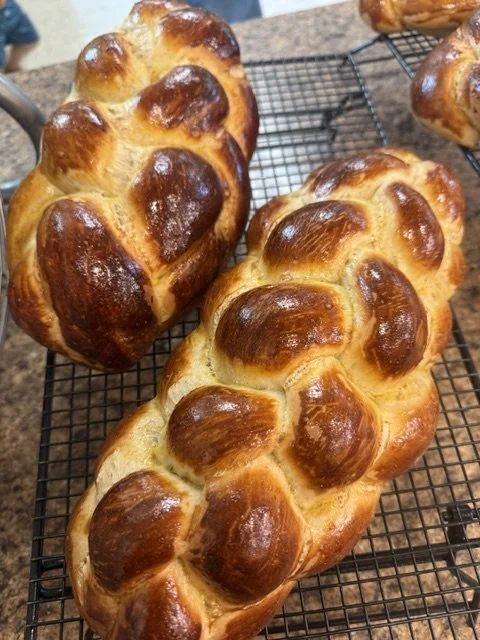
The Easiest Challah Ever
Yield 2 loafs
965g (7 cups or 2.2 lbs) ½ bread flour ½ all purpose flour
100g (½ c) sugar or honey
20g (1 Tbs) salt
20g (1-2 Tbs) dry yeast
100g (1/2 cup) Sunflower/Canola/Olive oil
450g (2 cups) room temp water
2 egg yolks for washing
Using unit of measurement/mass for baking is more precise
This recipe will yield about 1650g of dough (2.2lbs) / 3800g (5lbs). I strongly recommend weighing each ingredient with a kitchen scale to avoid inconsistencies: due to the variations in density in how you'll fill your cups or spoons, you will not be able to reproduce the recipe over time.
Making the Dough
1. Pour all the wet then the dry ingredients into the mixer bowl.
2. If Hand mixing, add the water and the oil and start kneading,
3. If using a mixer, use a dough hook at a slow speed for about two minutes until the water is completely absorbed.
Only when the ingredients have been fully incorporated, continue kneading on a medium speed for 10-13 minutes until you get a flexible, smooth, and soft dough. Not sticky and not too dry.
For kneading by hand, one hand stirs the mixture while the other holds the bowl. At this point, I love to give the dough my full attention. Being present is part of the process.
First Rising
Shape the dough into a smooth compressed ball in a slightly greased bowl. Rub some oil on top of the ball before covering it with saran wrap/plastic bag, this will help the dough not to dry out. and let it rise at room temperature until it doubles in size. About 1 hour apx.
You can set the oven to 100 degrees for proofing
A humid environment for our dough will support the fermentation/rising stage and will prevent the dough from drying out. A cold room will slow down the activity of the yeast and might prolong this stage.
Dividing the Dough
After proofing DO NOT PUNCH DOUGH- Divide the dough into 3 or 6 defined weighted smooth balls.
The number and weight of each ball will depend on the type and size of Challah you'll be making.
Each ball represents a strand that will be used to braid.
Cover the balls with plastic for an additional 10- 20 minutes.
Rolling and Braiding
A silicon mat might be helpful
Release the air from each ball by gently pressing, folding it with your hands, and rolling it into a strand.
If the dough does not roll or stretch properly, DO NOT force it. Most likely, it will tear the dough and ruin the gluten structure. Give it another 3-4 minutes of rest while covered.
Each strand should be about 18 inches
Cover the dough in plastic while working with it ( don’t let it dry out)
Braid into a Challah using Challah Prince’s videos and instructions.
If you are going to roll your strands in seeds… Place a paper towel on your countertop and pour about 1 cup of water on the towel. Roll the dough strand on the towel and then in the seeds.
Second, rise and bake
Place your Challah on a cooking sheet with baking/parchment paper, cover it with a clean towel, and leave it to rise for about 40 minutes until the Challah nearly doubles in size.
Depending on your oven, the duration of preheating may vary. Have your oven ready by the time the Challah is ready to go in.
Wash the Challah with the egg yolk and top it with toppings.
Only using the yolk will give your loaf a shine and a darker golden color.
Place the Challah in a preheated oven at 180°C / 360°F without convection. Bake for 25-30 minutes until the Challah becomes golden and brown around the surface. The baking temperature and time can be different, considering different ovens and the size of the final product.
Internal bread temp.180 – 215 degrees
Ingredients for 5lbs flour
Yield 4 loafs
5 lbs White wheat Flour (AP) = 15 cups
220g Sugar = 1.25 cup
44g Salt = 2.25 tbsp
30 Dry yeast = 3.25 tbsp
225g Sunflower/Canola/Olive oil = 1.25 cup
1020g Cold Water = 4.25 cups less 2 tbsp
2 Egg yolk for washing
_______________________________________
https://www.facebook.com/ChallahPrince/
Notes:
1. Master the Dough and Kneading
● Mind the Flour: Challah dough can be sticky. Your natural inclination might be to add more flour while kneading, but doing so will result in a dense loaf. Instead, lightly spray your hands and work surface with neutral oil.
● Windowpane Test: Proper gluten development is the secret to a fluffy, high-rising challah. Knead by hand or in a stand mixer for 10–12 minutes. To check if it's done, stretch a small piece of dough thinly until light passes through it. If it tears easily, keep kneading. 2. Shaping and Braiding
● Let the Dough Rest: After dividing the dough into equal parts, roll them into balls and let them rest for 10-15 minutes, covered. This relaxes the gluten and makes the strands much easier to roll out without springing back.
● Tuck the Ends: When braiding, keep your strands somewhat loose—do not braid too tightly, as the bread needs room to expand. Pinch the ends together securely at the top and bottom, and tuck them neatly underneath the loaf. 3. Proofing and Egg Wash
● The Second Rise: The final rise (proofing) is crucial. Cover your braided loaves with a damp towel or loosely with oiled plastic wrap. Let them double in size. Be careful not to over-proof, which can cause the bread to deflate in the oven.
● The Perfect Shine: Give the loaf an egg wash (1 whole egg whisked with a pinch of salt and a splash of water) before baking. For a super glossy bakery finish, apply a second layer of egg wash just before putting the loaf into the oven. 4. Baking and Cooling
● Baking Temperature: Most challahs are baked between 350°F and 375°F. Because egg washes contain a lot of sugar and protein, keep an eye on the crust so it doesn't get too dark too fast; you can loosely tent the loaf with aluminum foil for the last 10 minutes of baking.
● Internal Temperature: The most reliable way to tell if challah is done is by checking the internal temperature. Insert an instant-read thermometer into the thickest part of the center of the loaf; it should read 190°F–200°F. Patience in Cooling: It is very tempting to tear into the bread right out of the oven, but the interior continues to cook and set while it cools. Let it cool completely on a wire rack before slicing to prevent a gummy texture.
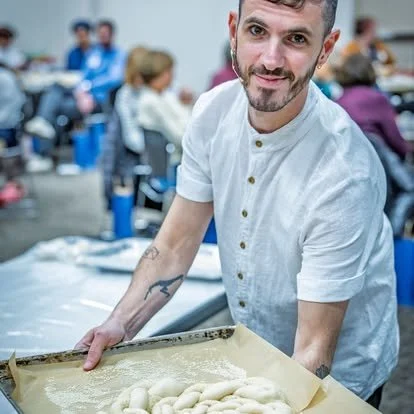
Challah Prince
Four Strand Round Loaf
Four Strand Braid
Six/6 Strand Braid